Uptown Elegance, Above 59th
One of New York’s most prestigious neighborhoods, the Upper East Side is built in limestone and ritual. Largely residential, it's known for elegant doorman buildings with carved façades; luxury boutiques along Madison Avenue; pre-war townhouses with iron railings; museum steps that anchor Fifth Avenue; and easy access to Central Park.
Where is the Upper East Side?
The UES sits along the eastern edge of Central Park. If you’re standing on the park’s east side and walk toward the East River, you’re in it.
It runs north of midtown and 59th Street, up through the 90s. Central Park forms its western edge, and the East River defines its eastern boundary. In simple terms, it’s the stretch of Manhattan between Fifth Avenue and the river once you’re above 59th.
- South: 59th Street, just north of Midtown
- North: Extends up through the 90s (generally to 96th Street)
- West: Central Park
- East: The East River waterfront
Neighborhood pockets within it include Lenox Hill, Carnegie Hill, and Yorkville — but most people casually refer to the whole area as the Upper East Side. Subway lines run north–south along Lexington Avenue and Second Avenue, so getting to Midtown is quick, and Downtown is a straight shot.
Who lives here?
While the UES has historically associated with legacy wealth and long-established families, today the mix is broader and more layered:
- Anyone who appreciates its stability, full-service buildings, and cultural density
- Finance and law professionals who work in Midtown and value a short, predictable commute
- Medical professionals and researchers connected to institutions like Weill Cornell and Hospital for Special Surgery
- Families drawn to respected public and private schools, parks, and a more orderly street rhythm
- Renters in newer towers who want modern amenities while living in one of Manhattan’s most established neighborhoods
A common thread is people who want Manhattan’s energy within easy reach, but prefer coming home to the UES' quiet calm, elegance, and heritage.
What's it known for?
- Central Park at your doorstep — easy access to running paths, playgrounds, and green space
- Museum Mile on Fifth Avenue — major cultural institutions within walking distance
- Classic New York architecture — prewar buildings, townhouses, and full-service doorman residences
- A polished, residential atmosphere — quieter and more orderly than downtown neighborhoods
- Strong public and private school options — well-regarded education choices nearby
- Madison Avenue shopping — luxury retail and established brands
- Excellent healthcare access — major hospitals and medical centers close by
- Reliable subway access — direct routes to Midtown and Downtown
- Well-developed everyday infrastructure — grocery stores, pharmacies, specialty markets, and fitness studios
- A reputation for stability and prestige — long associated with established New York life
What are transit options? How do most people get around?
The Upper East Side is well connected by subway and bus, and most residents rely primarily on public transit and walking.
Subway lines serving the neighborhood include:
- 4 / 5 / 6 trains (Lexington Avenue Line) — the backbone of East Side commuting
- Q train (Second Avenue Subway) — newer line with less crowding and direct Midtown access
These lines run north–south and provide quick access to Midtown,
Downtown, and Brooklyn connections.
Residents typically get around by:
- Walking (daily errands, school drop-offs, Central Park access)
- Subway (primary commuting method)
- Citi Bike
- Uber / taxis
- Car services (less common for daily commuting, more for convenience or weekend travel)
Because the Upper East Side is very residential and well-structured, most daily needs are within a short walk. Select buildings, like Maison 78, may offer onsite parking.
How far is it from?
Below are common commute estimates from the Upper East Side by subway (times vary slightly by exact address and train line):
- Midtown (Grand Central / 42nd Street): ~10–15 minutes
- Times Square: ~15–20 minutes
- Central Park (west side of the park): 5–10 minute walk from most locations
- Financial District (Wall Street): ~25–35 minutes
- Union Square: ~20–25 minutes
- Brooklyn (Downtown Brooklyn): ~30–40 minutes
- Upper West Side: ~15–25 minutes (typically via bus or subway + transfer)
- LaGuardia Airport: ~25–35 minutes by car; ~45–60 minutes by transit
- JFK Airport: ~45–60 minutes by car; ~60–75 minutes by transit
What about cost of living?
For renters, the Upper East Side generally falls in the upper tier of New York City pricing, though it isn’t always the most expensive part of Manhattan. Rents are typically higher than in neighborhoods like Astoria and often above much of Long Island City, while competing closely with prime Brooklyn areas such as Williamsburg or Brooklyn Heights. Compared to some downtown Manhattan enclaves, pricing can be similar or occasionally slightly lower depending on the building and amenity level.
Beyond rent, day-to-day expenses tend to track on the higher side as well. Grocery stores range from standard chains to specialty markets, but overall food prices, dining out, fitness memberships, and personal services often reflect the neighborhood’s upscale positioning. That said, residents benefit from strong everyday infrastructure and walkability, which can reduce transportation costs and make routine errands convenient without relying heavily on a car.
What key landmarks and attractions are there?
- Central Park (east side entrances) — Immediate access to the Jacqueline Kennedy Onassis Reservoir loop, Conservatory Water, East Meadow, and multiple playgrounds just steps from Fifth Avenue.
- Museum Mile (Fifth Avenue) — A concentrated stretch of institutions including the Neue Galerie, Cooper Hewitt, The Jewish Museum, Museum of the City of New York, and El Museo del Barrio.
- The Metropolitan Museum of Art — A global cultural anchor with encyclopedic collections spanning ancient to contemporary art.
- Solomon R. Guggenheim Museum — Frank Lloyd Wright’s iconic spiral building showcasing modern and contemporary works.
- The Frick Collection — European master paintings displayed in an intimate Gilded Age mansion setting.
- Madison Avenue — Flagship designer boutiques, heritage brands, and polished storefronts.
- The East River Esplanade — A quieter waterfront path for walking, jogging, and skyline views.
- 92NY (92nd Street Y) — Talks, performances, concerts, classes, and community programming year-round.
- Carl Schurz Park — Riverfront green space with promenades, dog runs, and Gracie Mansion.
- Roosevelt Island Tram (at 59th Street) — A quick aerial ride offering dramatic views over the East River and Midtown skyline. ring dramatic views over the East River and Midtown skyline.
What are some great places to eat on the UES?
- Daniel — 60 E 65th St — Formal French dining with meticulous execution and polished service.
- Sushi Noz — 181 E 78th St — Intimate omakase known for precision and seasonal sourcing.
- Le Veau d’Or — 129 E 60th St — Classic French bistro, compact menu, strong bar presence.
- Chez Fifi — 140 E 74th St — Townhouse setting with French-Basque leanings and a tight reservation list.
- Mission Ceviche — 1400 2nd Ave — Modern Peruvian focused on bright seafood and clean flavors.
- Up Thai — 1411 2nd Ave — Reliable Thai spot with balanced spice and steady crowds.
- NR (Cocktails & Ramen) — 339 E 75th St — Craft cocktails paired with well-built ramen.
- J.G. Melon — 1291 3rd Ave — Cash-only burger institution, unchanged and always busy.
- The Penrose — 1590 2nd Ave — Lively bar and brunch mainstay with a broad comfort menu.
- Sant Ambroeus (Madison Avenue) — 1000 Madison Ave — Milan-born café for espresso, lunch, and polished Italian staples.
- E.A.T. — 1064 Madison Ave — Classic UES café near the Met for breakfast, smoked fish, and daytime staples.
What schools are on the UES? What are options for K-12?
The Upper East Side offers a rare concentration of both highly regarded public schools and some of New York City’s most established private institutions. Families here typically choose between strong zoned neighborhood schools, selective public programs, and independent K–12 campuses clustered throughout the area.
Public (NYC DOE)
- Highly regarded zoned elementary schools such as P.S. 6 and P.S. 290
- Strong middle school options including M.S. 114
- Selective public high schools like Eleanor Roosevelt High School
- Access to citywide specialized and screened programs
Private & Independent
- Prominent all-girls K–12 schools such as Brearley, Hewitt, and Nightingale-Bamford
- Co-ed college preparatory options like Birch Wathen Lenox and * Trevor Day School
- Catholic schools including Marymount School of New York
Where do people do everyday shopping on the UES?
- Specialty markets: Eli’s Market, Eli’s Essentials, Agata & Valentina, Citarella, Butterfield Market — Upscale picks for prepared foods, bakery items, seafood, imported goods, and curated pantry staples.
- Full-service groceries: Whole Foods, Fairway Market, Morton Williams — Best for weekly grocery runs and everyday essentials.
- Neighborhood grocery chains: D’Agostino, Gristedes — Classic NYC standbys with multiple nearby locations.
- Pharmacies & essentials: CVS, Duane Reade (Walgreens), Rite Aid — Easy stops for prescriptions and daily basics, plus local independent drugstores.
- Quick stops: Neighborhood bodegas & produce stands — Convenient for last-minute items within a few blocks of most residences.
What other well-known boutiques or shops are there?
Unique Finds:
- Blue Tree — Eclectic, longtime Madison Avenue boutique with apparel, jewelry, home goods, and unexpected finds.
- ABC Carpet & Home — Design-driven home furnishings and décor, known for global sourcing, vintage pieces, and statement interiors.
- Kirna Zabête — Curated multi-brand fashion boutique known for directional designer collections.
- The Niche Shop — Vintage and pre-owned pieces with a tightly edited, fashion-forward selection.
- Bonpoint — Refined French children’s boutique with a strong Madison Avenue presence.
- Kitchen Arts & Letters — Independent cookbook shop on Lexington Avenue, beloved by serious home cooks.
- The Tiny Dollhouse — Specialty miniature and dollhouse shop with a longstanding UES following.
- E.A.T. Gifts — Giftable food items and curated culinary goods from the iconic Upper East Side market.
- Ladurée — Exquisite French patisserie and gift macarons.
Other Luxury & Designer (Madison Avenue corridor): Hermès, Chanel, Louis Vuitton, Gucci, Prada, Dior, Saint Laurent, Valentino
Other Contemporary & Elevated Fashion:
Veronica Beard, Zimmermann, Reformation, GANNI, Alice + Olivia, Theory, Vince, Lafayette 148
Jewelry & Watches: Tiffany & Co., Cartier, Van Cleef & Arpels, Harry Winston, Buccellati
Beauty & Fragrance: Aēsop, Le Labo, Diptyque, Bluemercury, SUKOSHI, Zitomer Pharmacy, Silver Mirror Facial Bar
How safe is the UES?
The Upper East Side is one of Manhattan’s most established and residential neighborhoods, known for its doorman buildings, long-term residents, and steady daytime activity. Tree-lined side streets feel calm and orderly, while major avenues stay active with shops, schools, and everyday foot traffic. Like anywhere in New York, awareness matters, but overall the UES is widely regarded as one of the more predictable and comfortable places to live in the city.
Old New York. New Architecture.
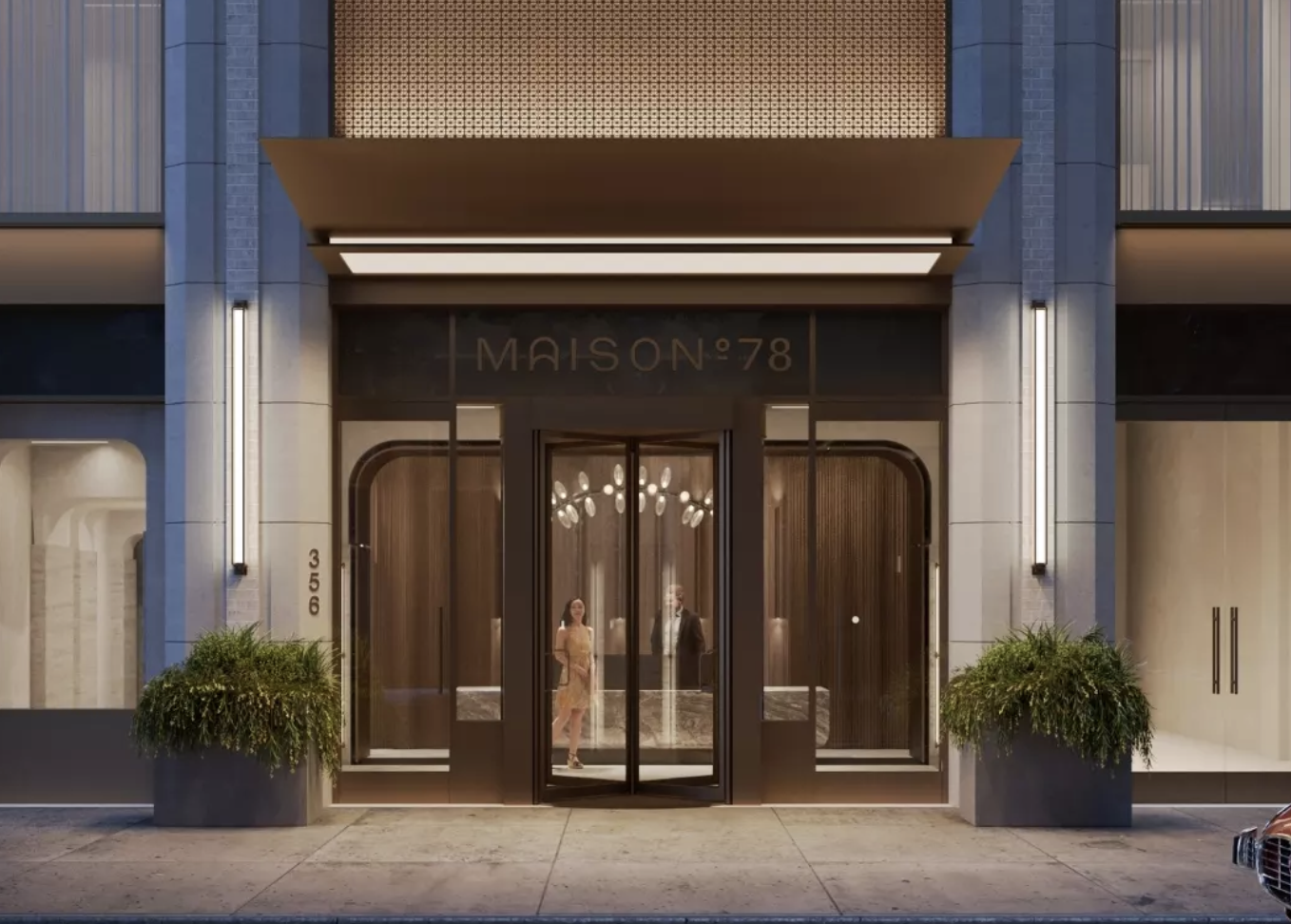
Maison 78 brings a striking new, AIA award-winning high-rise to the Upper East Side, pairing Old New York’s established elegance with confident, contemporary allure. Explore luxury apartments, penthouses, and exclusive amenities.